Description
The Snack That Became a Saudi Breakfast Institution
There’s a category of food that exists not because it was engineered by chefs, but because people kept ordering it until it became a permanent fixture on every menu. Chapati cheese chips is that item.
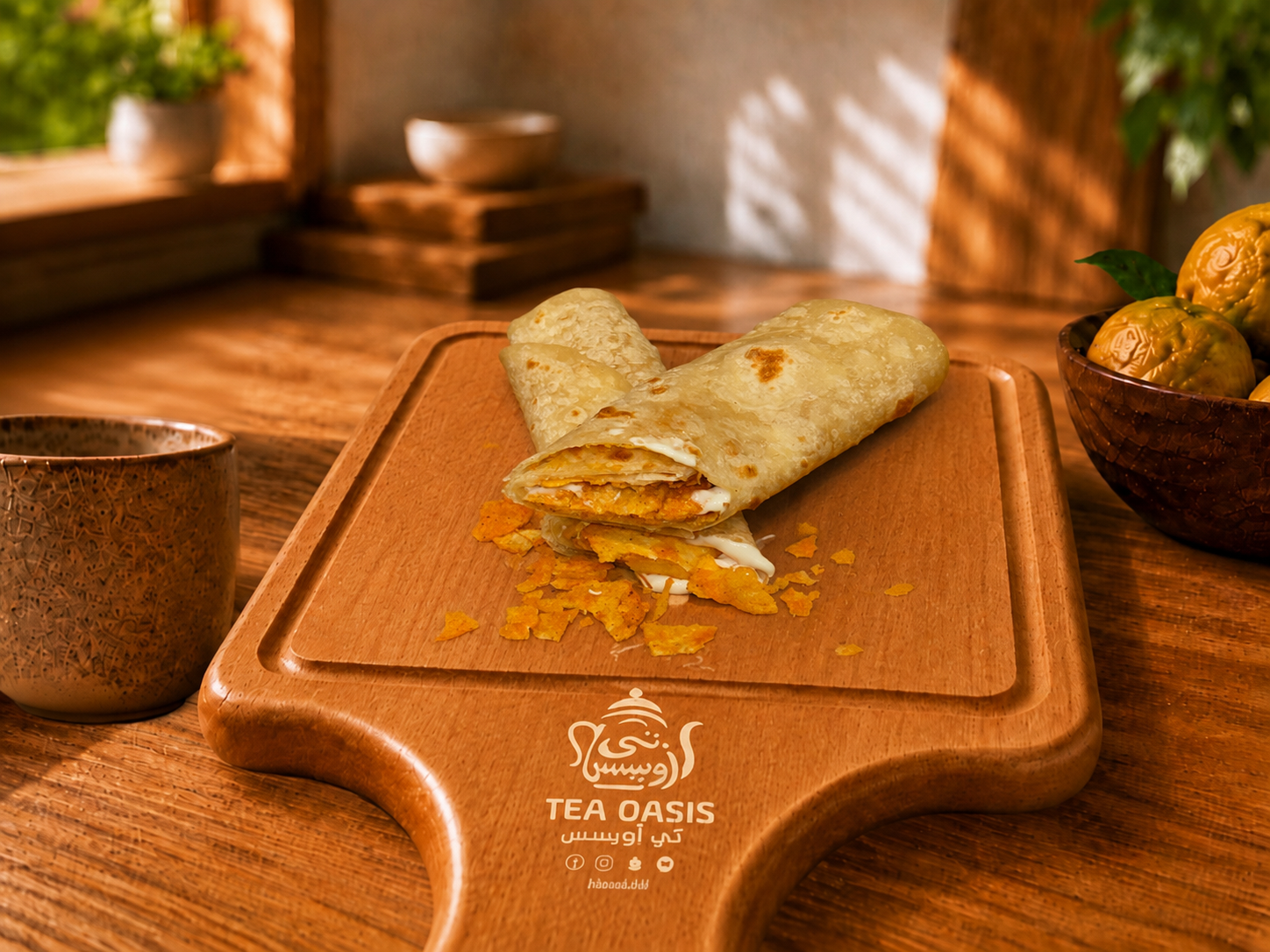
Walk into any chapati shop from Riyadh to Al Khobar and you’ll find some version of it: warm chapati, creamy melted cheese, and a generous handful of potato chips folded inside. The chips crunch. The cheese melts. The chapati wraps around both. It sounds like a snack someone invented on a Tuesday when the kitchen was running low on fillings — and it tastes like something you’ll order specifically next time.
At Tea Oasis, we’ve taken this classic combination and made it right. Fresh chapati, proper melted cheese, quality chips — made to order every single time.
Why Crispy Chips Inside Soft Chapati Actually Works
The reason chapati cheese chips works isn’t obvious until you eat it. Then it becomes completely obvious.
Soft chapati has a mild flavour and a pliable, slightly chewy texture. On its own, it’s excellent — but it doesn’t provide contrast. That’s what the chips do. Folded inside warm chapati, the chips hold their crunch longer than you’d expect. The warmth of the chapati softens their outer layer slightly, but the interior stays crisp. You get a bite that has the softness of the chapati, the crunch of the chip, and the creaminess of the melted cheese — three textures in a single mouthful.
This three-way texture combination is what food lovers call a ‘dynamic contrast experience.’ It’s the same principle behind crunchy toppings on smooth soups, or sesame seeds on soft buns. The contrast makes each element more noticeable and more satisfying than it would be alone. With chapati cheese chips, that contrast is the entire point.
Why This Specific Chip Matters?
In Saudi Arabia’s chapati culture, thin and lightly salted potato crisps have been a Gulf street-food staple for decades. They’re not the thickest, not the most intensely flavoured — and that’s exactly why they work inside chapati.
Thick, heavily seasoned crisps would overpower the cheese and compete with the chapati’s flavour. It sits underneath everything else. Their saltiness enhances the cheese without fighting it. Their crunch adds texture without turning every bite into a structural challenge. They’re the right chip for this specific application — which is why almost every chapati shop in Saudi Arabia reaches for them by default.
At Tea Oasis, we use quality chips that maintain the same principle: light, crispy, present without dominating.
Cheese Choice: What Makes the Difference
Not all cheese works equally well in a chapati cheese chips. The cheese has a job to do: bind the chips to the chapati, add creaminess, and provide the savoury depth that potato chips alone can’t supply.
Liquid cheese (processed cheese sauce) is the most common choice across KSA menus, and for good reason — it coats the chips evenly, heats quickly, and creates a consistent creamy layer throughout the chapati. Every chip gets cheese contact. Every bite tastes the same.
Cream cheese creates a thicker, richer layer with a slight tang that cuts through the chip’s saltiness. It doesn’t spread as fast as liquid cheese, but it creates pockets of concentrated flavour.
At Tea Oasis, we use a creamy, well-melted cheese that gives you coverage and flavour in every bite — not just in the middle where the filling concentrates.
Calories and Nutrition: The Real Numbers
Saudi café menus list chapati cheese chips anywhere from 125 to 408 calories — a range that tells you very little about what you’re actually eating. The spread reflects different portion sizes and cheese types, not a fundamental variation in the dish.
A standard serving at Tea Oasis — one chapati, a generous layer of melted cheese, a proper portion of chips — sits in the 300–370 calorie range. That breaks down approximately as:
- Chapati: 150–200 calories from flour and ghee — complex carbohydrates for sustained energy
- Melted cheese: 80–110 calories — fat, protein, calcium, and the creaminess that makes the whole thing work
- Potato chips: 70–90 calories for a standard serving — the crunch, the salt, and the contrast
This makes chapati cheese chips a proper snack — substantial enough to satisfy between meals, light enough not to replace one. It’s the item you order when you want something real, not a biscuit or a bag of crisps, but you’re not ready for a full breakfast.
When to Order It and What to Drink
Chapati cheese chips sits squarely in the snack category — not a breakfast item, not a lunch, but the thing you want at 10 AM between a morning meeting and whatever comes next, or at 4 PM when the afternoon needs punctuating.
It’s also one of the most universally liked items for group ordering. Children love it because it tastes like chips with cheese — which it is. Adults love it because the chapati makes it feel like a proper item rather than a bag of crisps. Everyone gets what they want from the same order.
For drinks: karak tea is the natural companion in Saudi chapati culture — its sweetness and cardamom warmth sit perfectly against the salty, crunchy filling. Saudi Coffee (Qahwa) works well for those who prefer something lighter. For children ordering alongside, a cold juice balances the saltiness of the chips without competing with the chapati’s warmth.
Visit us in Al Khobar or order via WhatsApp. Every chapati is made fresh — the chips are added right before the chapati is folded, which is the only way to guarantee they’re still crunchy when you eat it.
FAQ ON Cheese Chips