Description
Saudi Arabia’s Most Ordered Breakfast Chapati — Finally Explained
Walk into any chapati shop in Riyadh, Jeddah, Dammam, or Al Khobar. Scan the menu. Chapati egg with cheese appears on every single one — priced anywhere from 4 to 11.75 SAR depending on the shop and the build. It is, without question, the most widely available chapati filling across the Kingdom.
And yet, despite being ordered millions of times a week, nobody has ever written a proper article about it.
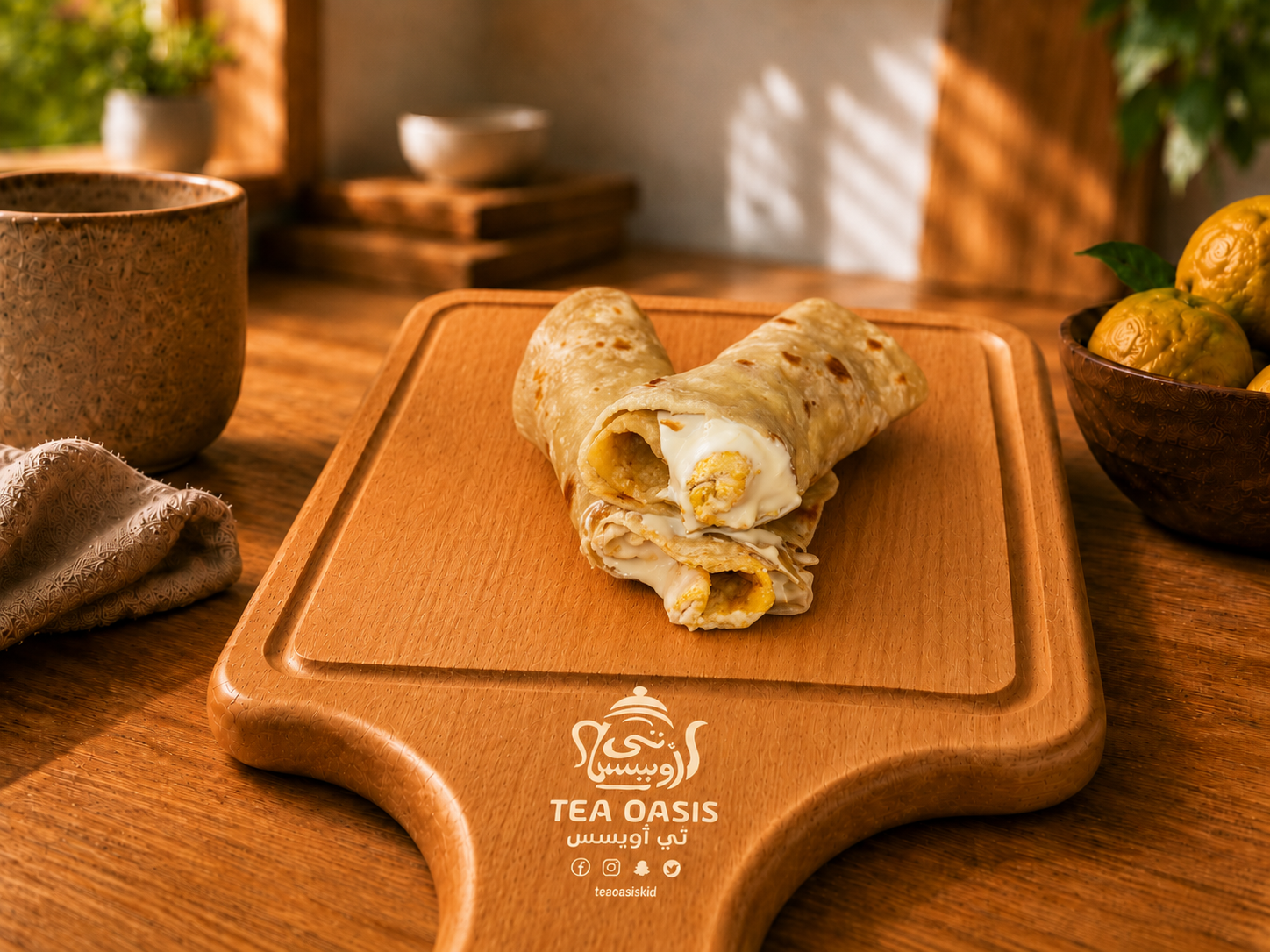
At Tea Oasis, we make it the right way: a fresh egg, cooked to order, combined with well-melted cheese inside warm chapati. Simple, fast, and more nutritionally complete than almost any other breakfast item in the same price range. This is what it is, why it works, and what makes ours worth ordering.
The Egg: Why It’s the Foundation, Not the Filler
Egg is not a filler in chapati egg with cheese. It’s the structural and nutritional centre of the whole item.
A single large egg delivers approximately 72 calories, 6–7 grams of complete protein, vitamins B12 and D, riboflavin, choline, selenium, and iron. No other ingredient you can put inside a 4–9 SAR chapati comes close to that nutritional profile per calorie. The egg is what makes this a breakfast and not just a snack.
Egg preparation matters more than most KSA menus acknowledge:
- Fried egg: crispy, slightly caramelised edges with a soft or set yolk depending on cook time. Adds a small amount of fat from the cooking oil. Visual appeal — the yolk colour against white cheese is genuinely appetising. Most popular choice by volume
- Boiled egg: cleaner, more neutral, lower in added fat. The yolk holds its structure inside the chapati rather than running. Good for those ordering multiple chapatis or watching total fat intake
- Scrambled egg: softest texture, most even distribution. Scrambled egg integrates with the cheese as it cooks — the two ingredients merge into a single creamy layer rather than sitting as separate components. Our recommended method for the most cohesive eating experience
At Tea Oasis, every egg is cooked fresh when you order. No pre-cooked batches sitting under a heat lamp.
The Cheese: Which Type Works Best with Egg
KSA menus list liquid cheese, cheddar, cream cheese, and kiri across different chapati shops — but nobody explains which to choose or why it matters.
With egg inside chapati, the cheese has two jobs: add creaminess to bind the filling, and provide the savoury depth that egg needs to feel like a complete flavour rather than just protein. How well it does both depends on the type:
- Liquid cheese (processed cheese sauce): best overall distribution. It flows around the egg and coats the inside of the chapati evenly. In every bite you get both egg and cheese. This is why it’s the most common choice across Saudi chapati shops — it works consistently and requires no technique
- Cheddar (sliced or grated): brings a sharper, more complex flavour than liquid cheese. When melted properly, it adds real flavour depth. Best for those who want the cheese to announce itself rather than blend into the background
- Cream cheese: richest option. Thick and tangy, it creates a dense filling when combined with egg. Pairs particularly well with scrambled egg because both are soft — the textures complement rather than contrast
At Tea Oasis, our cheese is melted fresh into the egg — not added as a cold slice. The heat from the chapati and egg melts the cheese through, so the filling is uniform and warm throughout.
The Protein Case: Why This Is the Highest-Protein Breakfast Chapati
Chapati egg with cheese delivers more protein than any other standard chapati filling. The numbers are clear:
- One large egg: 6–7g protein, complete amino acid profile
- One portion of cheese (30–40g depending on type): 5–8g additional protein plus calcium and fat
- Chapati: 4–5g protein from the flour, plus complex carbohydrates for sustained energy
Combined, a standard chapati egg with cheese delivers approximately 15–20 grams of protein per serving — rising to 20–28g if two eggs are used. No other single-filling chapati on a standard KSA menu gets close to this range without adding meat.
For gym-goers, students, workers with long mornings, or anyone who knows from experience that a light breakfast becomes a problem at 11 AM — this is the chapati order that actually carries you. The egg’s choline supports brain function and memory. The cheese’s calcium supports bone density and metabolism. The chapati’s complex carbs release energy steadily rather than spiking. It is genuinely the most complete breakfast chapati you can order.
The Calorie Question: Why the Range Is 250–418
Saudi menus list chapati egg with cheese anywhere between 250 and 418 calories. That’s a 168-calorie spread for what appears to be the same item — and it confuses almost everyone who looks at it.
The gap is real and the reasons are specific:
- Egg preparation: a fried egg adds 30–50 extra calories from cooking oil compared to a boiled or scrambled egg made without added fat
- Cheese type and quantity: liquid cheese at a generous pour adds more calories than a single kiri triangle. Cheddar slices vary by thickness. Cream cheese is denser calorie-for-calorie than most other types
- Chapati size and ghee content: larger chapatis or those made with more ghee in the dough contribute 30–60 calories more than smaller, lighter versions
At Tea Oasis, our chapati egg with cheese sits in the 320–380 calorie range — a fried egg, good cheese coverage, fresh chapati. It’s a proper breakfast portion: filling without being heavy.
When to Order and What to Pair With It
Chapati egg with cheese belongs at breakfast. That’s not a limitation — it’s a recommendation. The egg’s protein, the cheese’s fat, and the chapati’s carbohydrates hit in a sequence that gives you the widest possible fuelling window before your next meal. Order this at 7 AM and you’re sustained to 11 or noon without the mid-morning slump that lighter breakfasts cause.
For families: this is the item that works across all ages without negotiation. Children eat it. Adults want it. It takes under five minutes to make and doesn’t require any explanation of what’s in it.
For drinks: karak tea is the Saudi standard, and it’s the right call here. The spiced sweetness of karak sits perfectly against the savoury egg and cheese filling — a pairing so natural that every chapati shop in the Kingdom serves them together. Earl Grey works for those who want something lighter alongside the richness of the egg. English Breakfast Tea is the third option — strong, clean, and capable of standing up to the chapati’s filling without being overwhelmed by it.
Visit Tea Oasis in Al Khobar or order directly via WhatsApp. Tell us your egg preference — fried, boiled, or scrambled — and your cheese choice. We’ll have it ready fresh, exactly as you want it.
FAQ ON Egg with Cheese