Description
The Sweet-Savoury Chapati Saudi Arabia Never Got Tired Of
Some food combinations need explaining. Cheese and honey doesn’t. The moment you taste creamy, mildly salty cheese against natural honey’s floral sweetness, the logic is immediate — and it’s a combination that has appeared on breakfast tables, dessert menus, and now chapati shops across the Arab world for as long as anyone can remember.
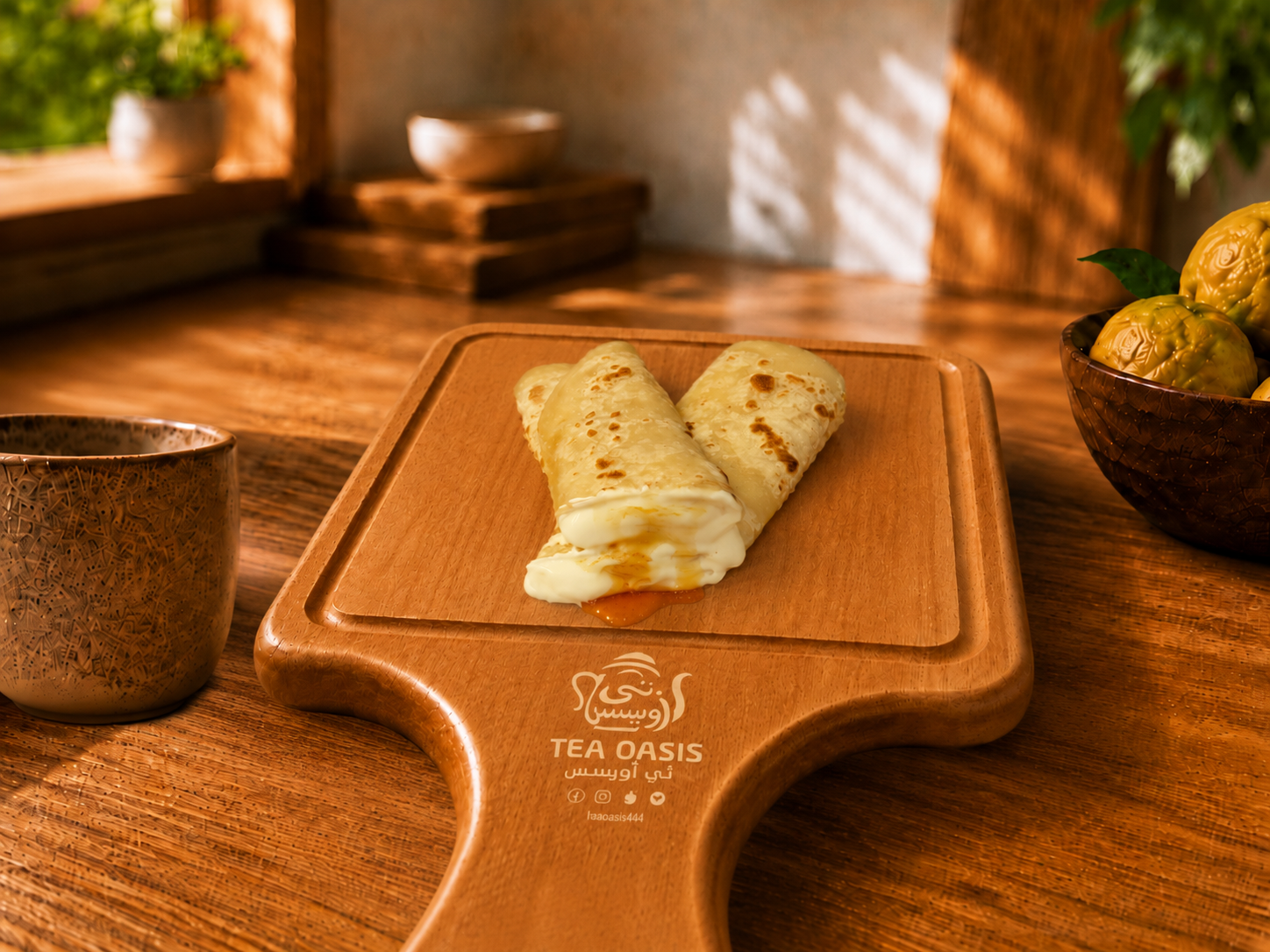
In Saudi Arabia specifically, chapati cheese with honey appears on nearly every chapati menu — from budget chain stores in Riyadh to premium chapati houses in Jeddah serving generous cream cheese and honey pies. It’s one of the most consistently ordered sweet chapati fillings in the Kingdom, and yet nobody has written about why it works or what makes a good version of it.
At Tea Oasis, we serve it properly: fresh chapati, real cream cheese, and natural honey applied generously. Below, we explain the science behind why sweet and salty work so well together, which cheeses give the best result, and how to order it the way it’s meant to taste.
The Science of Sweet and Salty: Why This Combination Works
Cheese and honey is a textbook example of contrast-based flavour pairing — the same principle behind salted caramel, prosciutto and melon, or dates and tahini.
Cream cheese (or any mild cheese) carries fat, protein, and a gentle salinity. Honey carries concentrated sugar, floral aromatics, and in raw or natural honey, subtle bitterness and acidity depending on the floral source. When combined, the salt in the cheese amplifies the perception of sweetness in the honey — your palate registers the honey as richer and more complex than it would taste alone. Simultaneously, the cheese’s fat coats the tongue and slows the release of sugar, making the sweetness feel rounder and less sharp.
This is why cheese and honey has persisted across cuisines for centuries — it isn’t a trend, it’s a flavour principle that consistently produces a more satisfying result than either ingredient alone. Inside warm chapati, that effect intensifies: the bread’s gentle warmth softens the cheese slightly and lets the honey flow into every layer.
Choosing Your Cheese: Cream Cheese, Cheddar, Kiri, or Liquid
Not every cheese pairs with honey the same way. Saudi chapati menus offer at least four variations, and each creates a genuinely different experience:
- Cream cheese: the most common and most balanced choice. Its mild tang and thick, spreadable texture hold the honey in place without becoming runny. The tang adds a subtle acidity that keeps the sweetness from feeling one-dimensional. This is the version most chapati shops default to, and for good reason
- Cheddar: a bolder, sharper option. Cheddar’s more pronounced saltiness and complexity stand up better against strong, dark honey varieties. If you want the cheese to be as noticeable as the honey, cheddar is the choice
- Kiri (soft processed cheese triangles): the mildest option. Kiri’s neutral, slightly creamy flavour lets the honey lead almost entirely — a good choice for those who want maximum sweetness with minimal cheese interference
- Liquid cheese: flows and coats evenly through the chapati, ensuring the honey has cheese contact in every bite rather than pooling in one spot. A practical choice for consistency
At Tea Oasis, our default is fresh cream cheese — the most balanced option — but we’re happy to prepare it with cheddar if you prefer a sharper contrast.
Saudi Honey: A Story Worth Telling
Most people don’t think twice about the honey in their chapati. They should — because Saudi Arabia produces some of the most researched and nutritionally significant honey in the world.
Research on Saudi Sidr and Talh honey, published in peer-reviewed nutrition journals, has documented genuinely impressive effects. A 2025 study in Frontiers in Nutrition found that Talh honey reduced body weight, fat mass, and key metabolic markers including blood glucose, insulin resistance, and cholesterol in controlled research — alongside measurable antioxidant and anti-inflammatory effects in the liver. Separate research from King Abdulaziz University has documented the antimicrobial and antioxidant properties of honey from the Asir and Jazan regions of Saudi Arabia, identifying short peptides and flavonoid compounds responsible for the effects.
This isn’t folk wisdom — it’s published nutritional science specifically about honey sourced from Saudi Arabia’s own regions. When you order chapati cheese with honey at Tea Oasis, you’re not just getting a sweet treat. You’re getting an ingredient with a genuine, locally-rooted nutritional pedigree.
Calories and When to Order It
Calories for chapati cheese with honey vary significantly by format and portion:
- Standard chain chapati: 250–325 calories — the typical Saudi café portion
- Premium pie format (larger, more cheese and honey): up to 769 calories — a substantial, dessert-like portion
At Tea Oasis, our standard build sits in the 290–320 calorie range — generous enough to feel indulgent without tipping into dessert-sized portions.
This is a flexible item: light enough for breakfast, sweet enough to work as an afternoon treat, and rich enough to satisfy a dessert craving without ordering something heavier. It’s particularly popular as the ‘sweet half’ of a mixed chapati order — paired with a savoury item like egg with cheese or chapati liquid cheese for a complete, balanced spread.
For drinks: karak tea is the natural pairing, though the honey already provides sweetness, so a lighter karak or plain black tea avoids over-sweetening the experience. Plain black tea is an excellent alternative — its clean, brisk finish cuts through the honey’s richness without adding more sweetness. Visit Tea Oasis in Al Khobar or order via WhatsApp; tell us your cheese preference and we’ll have it ready fresh.
FAQ ON Chapati Cheese with Honey