Description
The Sweet Chapati Filling Every Saudi Café Has — and Nobody Has Explained
If you’ve ordered a sweet chapati anywhere in Saudi Arabia, there’s a strong chance it had hazelnut cream inside. From budget chains in Riyadh pricing it at 5 SAR to premium chapati houses charging 14 SAR for a generous portion, hazelnut cream is the single most universal sweet chapati filling across the Kingdom — popular with children, adults, and everyone in between.
And yet, despite being on practically every menu, nobody has actually written about what makes a good hazelnut cream chapati, what the calorie variation across menus actually means, or why the combination with banana has become so popular.
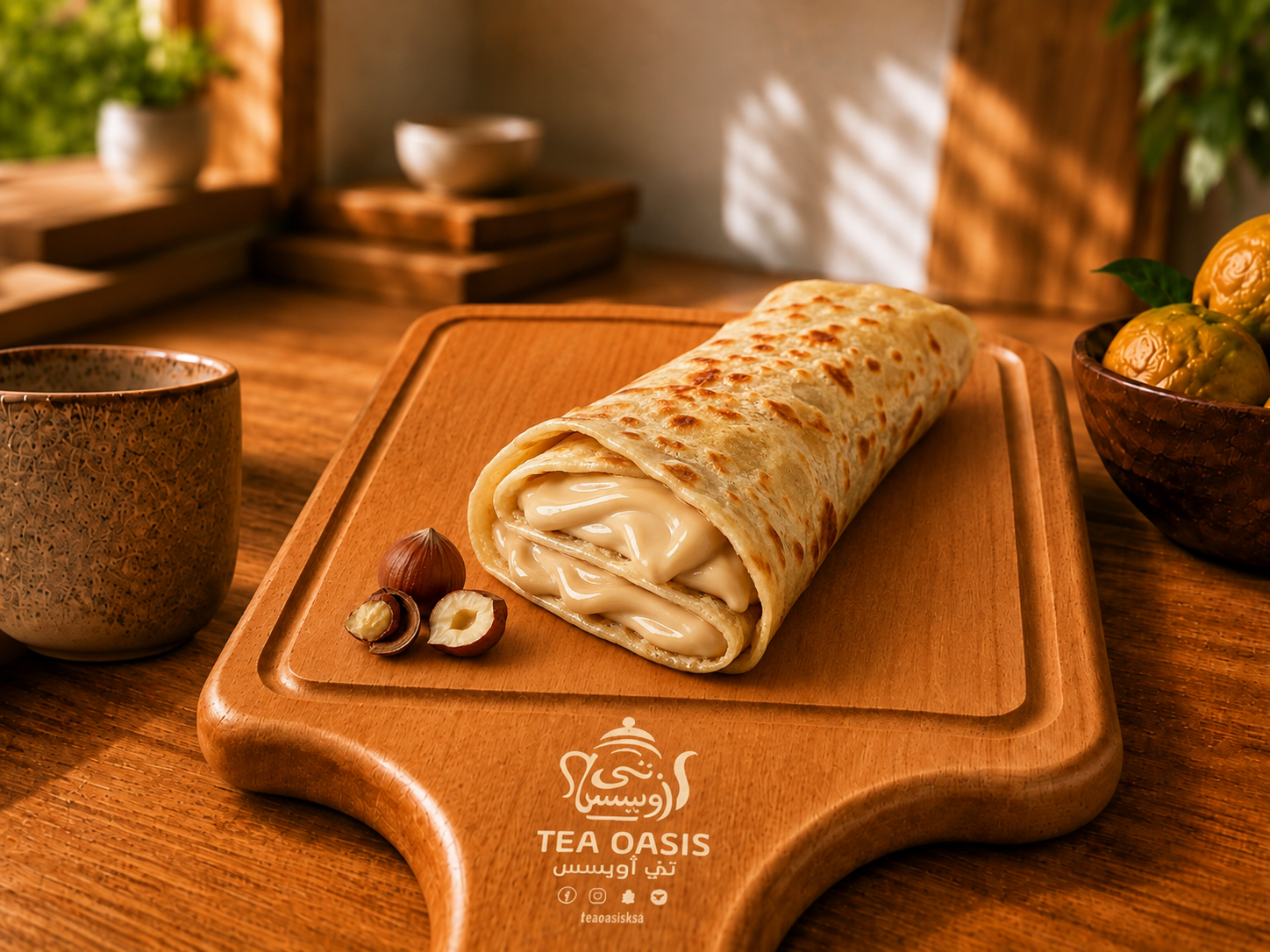
At Tea Oasis, we serve it the way it should be: warm chapati, a generous layer of rich hazelnut cocoa cream, melting slightly into the bread’s warmth. This is what it is, what to look for in quality, and why the banana upgrade is worth trying.
What Goes Into Real Hazelnut Cream
Not all hazelnut cream is created equal — and the ingredient list matters more than most people realize.
Quality hazelnut spread starts with roasted hazelnuts as the primary ingredient, blended with cocoa, a touch of sugar, and minimal oil. Lower-quality versions flip this ratio: sugar becomes the first ingredient, with hazelnuts making up as little as 13% of the total content, and inexpensive vegetable oils used to achieve a spreadable texture. The difference is immediately noticeable in flavor — genuine hazelnut spread has a roasted, nutty depth that sugar-forward versions simply don’t achieve, no matter how much chocolate flavoring is added.
At Tea Oasis, we use a quality hazelnut cream with a genuine hazelnut and cocoa presence — not a sugar spread with hazelnut flavoring as an afterthought.
The Nutritional Case: Hazelnuts and Cocoa Aren’t Just Indulgence
It’s easy to file hazelnut cream chapati under ‘pure treat’ and move on. But the core ingredients carry genuine nutritional substance worth knowing about.
- Hazelnuts: a documented source of heart-healthy monounsaturated fats, vitamin E, and antioxidants. Research has linked hazelnut consumption to improved cholesterol profiles and cardiovascular support
- Cocoa: rich in flavonoids — plant compounds linked in published research to lower blood pressure and improved mood. Higher-quality cocoa (rather than heavily processed, fat-reduced versions) retains more of these beneficial compounds
- Combined effect: while hazelnut cream is still a sweet, calorie-containing treat, it isn’t nutritionally empty. The fat and antioxidant profile from quality hazelnuts and cocoa puts it in a different category from sugar-only sweet fillings
This doesn’t make chapati hazelnut cream a health food — it’s a treat, and should be enjoyed as one. But it’s a treat built on genuinely beneficial ingredients when the quality is right, which is more than can be said for most sweet chapati fillings on the market.
Why the Calorie Range Across Saudi Menus Is So Wide
Search any KSA chapati menu and you’ll find hazelnut cream chapati listed anywhere from 135 to nearly 600 calories. That’s not inconsistent data — it reflects two very different products being sold under the same name:
- Standard chain portion: 255–278 calories — the typical single-layer spread on a regular-sized chapati
- Premium, generous portion: up to 591 calories — larger chapati, thicker hazelnut layer, sometimes a double application
- With banana added: 380+ calories — the banana itself adds natural sugars and roughly 90–100 calories, transforming the item into something closer to a full dessert
At Tea Oasis, our standard build sits in the 280–310 calorie range — a satisfying, properly generous portion without tipping into the 500+ calorie premium-pie category.
The Banana Upgrade: Why It’s Worth Trying
Hazelnut cream and banana is a combination that appears across Saudi chapati menus for good reason — it isn’t just an add-on, it’s a genuine flavour and texture upgrade.
Banana brings natural sweetness that complements rather than competes with the hazelnut cream’s sugar, plus a soft, slightly starchy texture that contrasts pleasantly with the smooth cream. It also adds potassium, fibre, and vitamin B6 — nutrients the plain hazelnut cream chapati doesn’t provide. The combination feels more substantial and more like a complete dessert rather than just a sweet snack.
If you’ve only had plain hazelnut cream chapati, the banana version is worth ordering once — many customers who try it end up ordering it as their default.
Why Kids Love It (and So Do Adults)
Of every sweet item on a chapati menu, hazelnut cream is consistently the most universally loved across age groups. The flavour profile — sweet, chocolatey, nutty — requires no acquired taste. Children who won’t touch labneh or za’atar will eat hazelnut cream chapati without hesitation.
This makes it one of the most reliable family-ordering items. If you’re ordering a mixed spread for a group that includes children, hazelnut cream chapati is close to a guaranteed win.
For drinks: karak tea works well, though for the sweetest builds (especially with banana), a lighter tea like Earl Grey or even plain water can balance the sweetness better than another sweetened drink. Visit Tea Oasis in Al Khobar or order via WhatsApp — ask about the banana upgrade if you haven’t tried it.
FAQ ON Chapati Hazelnut Cream