Description
Al Khobar’s Best-Kept Heritage Secret — On Five Different Menus
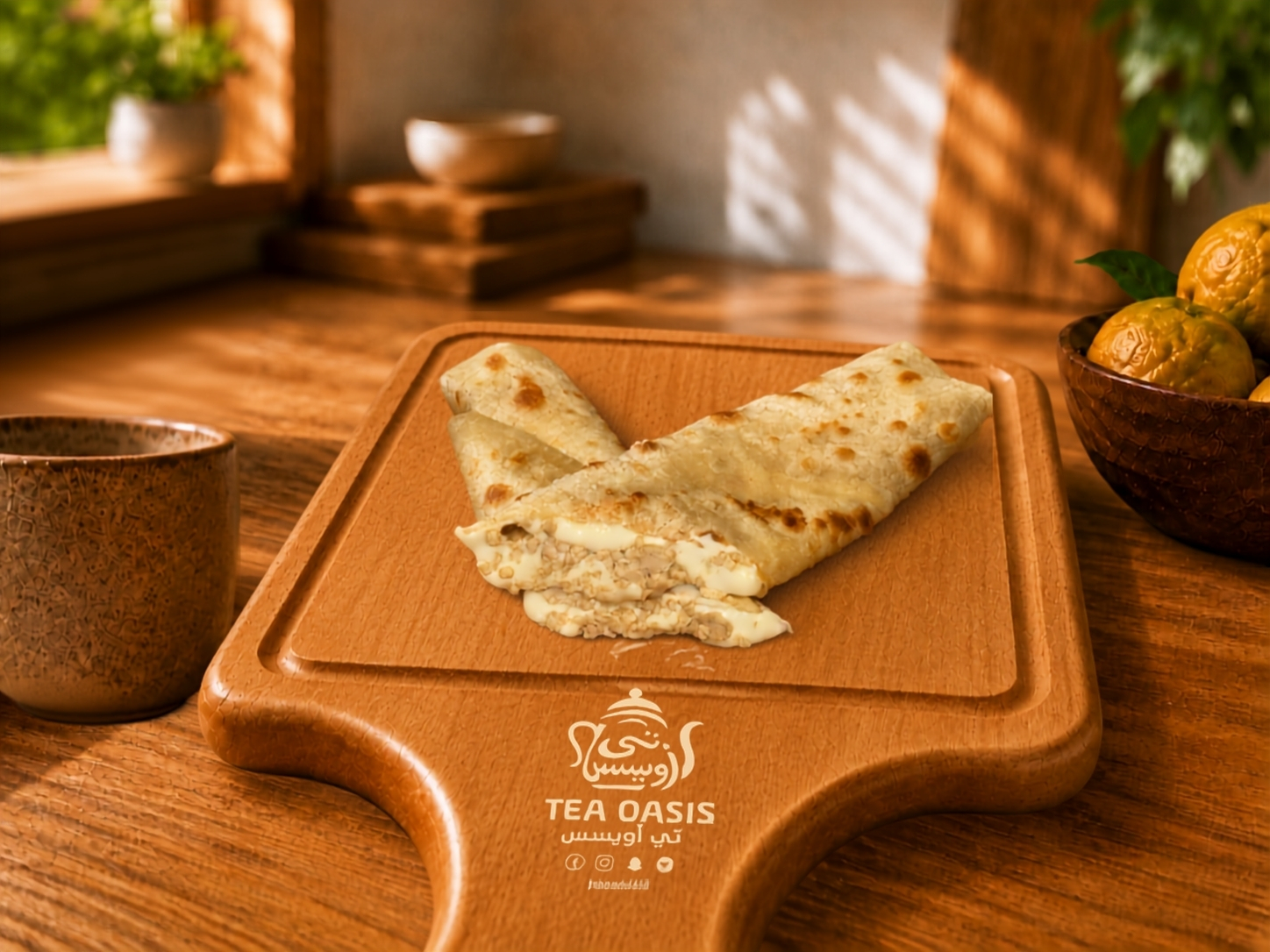
Walk into nearly any chapati shop in Al Khobar and you’ll find rahash with cheese on the menu. It’s quietly one of the most consistently available items in the city — and yet most people ordering it have never been told what ‘rahash’ actually means or why it’s worth ordering in the first place.
At Tea Oasis, we think it deserves better than a one-line menu listing. This is what rahash actually is, why it’s paired with cheese, and why it’s one of the most genuinely traditional items we serve.
What Rahash Actually Is
Rahash is the Gulf name for tahini halva — a dense, sesame-based sweet made by combining ground sesame paste (tahini) with sugar or natural sweeteners, sometimes enriched with pistachios, cardamom, or other flavourings. It has nothing to do with chocolate spreads or honey; the flavour is distinctly nutty, intensely sesame-forward, and far denser in texture than any cream or spread.
This isn’t a modern café invention. Halva-style sweets trace back to 7th-century Arabia, where early versions combined mashed dates with milk. By the 9th century, halva had spread across the Middle East and Persia, developing regional variations. The tahini-based version we know today as rahash emerged later and became firmly established as a cherished Gulf dessert by the 12th to 14th centuries — meaning the flavour inside this chapati has roots stretching back well over a thousand years.
Historically, rahash held a place of genuine cultural significance — closely tied to Gulf hospitality, traditionally served alongside Arabic coffee during gatherings and special occasions. What you’re eating inside warm chapati today carries that same lineage.
Why Cheese Belongs with Rahash
Rahash on its own is intensely sweet and dense — the kind of flavour traditionally balanced by a strong cup of Arabic coffee or tea rather than eaten alone in large quantities. Cheese performs a similar balancing role inside the chapati.
The saltiness and creaminess of cheese cuts directly through rahash’s concentrated sweetness, the same way a strong coffee would. It also adds moisture and a contrasting texture — rahash is dense and slightly crumbly, while cheese is smooth and yielding. Together, they create a filling that’s genuinely more balanced and easier to enjoy than rahash alone, without losing any of its distinctive sesame depth.
This is why nearly every Al Khobar chapati shop that carries rahash also offers it specifically paired with cheese — it’s not a random combination, it’s a technique that makes a traditionally intense flavour more approachable.
The Nutritional Substance Behind the Sweetness
Sesame, the core ingredient in rahash, carries genuine nutritional weight. Tahini is rich in plant-based protein, healthy unsaturated fats, and minerals including calcium and magnesium — properties that quality Saudi halva producers highlight as part of what makes the dessert more than just sugar.
- Plant protein: sesame paste contributes meaningful protein content compared to sugar-based sweet spreads
- Healthy fats: predominantly unsaturated fats that support cardiovascular health as part of a balanced diet
- Calcium and magnesium: sesame is a notably good source of both minerals, relevant for bone health
- Combined with cheese: adds further protein and calcium, making this one of the more substantial sweet chapati fillings available
This is part of why rahash chapati tends to run higher in calories (290–420 cal) than lighter sweet options — it’s a genuinely denser, more substantial filling, not an inflated portion.
Plain Rahash vs. Rahash with Cheese
Most Al Khobar menus, including ours, offer rahash both plain and paired with cheese:
- Plain rahash chapati: the unfiltered sesame halva experience — intense, dense, traditionally sweet, best appreciated alongside a strong tea or coffee
- Rahash with cheese: the more balanced, approachable version — cheese moderates the sweetness and adds creaminess, making it easier to enjoy as a standalone item without a drink to cut through it
If you’ve never tried rahash before, the cheese version is the better starting point. If you already know and love rahash’s intensity, the plain version delivers it without compromise.
Order from Tea Oasis, Al Khobar
Karak tea is the traditional pairing for rahash, echoing centuries of Gulf hospitality where strong tea or coffee accompanied this exact dessert. Visit us Tea Oasis in Al Khobar or order via WhatsApp — every chapati is made fresh, with genuine rahash and quality cheese in proper balance.