Description
More Than a Drink — A Tradition in a Cup
The word ‘qahwa’ comes from Arabic roots meaning ‘to invigorate’ or ‘to give energy.’ That’s not marketing language — it’s the literal meaning embedded in the word itself, and it tells you everything about what this drink has meant across centuries of Arabian hospitality.
At Tea Oasis, we serve Saudi coffee the way it’s meant to be served: lightly roasted, lightly spiced, golden in colour, and always offered as a gesture of welcome. Whether you’re pairing it with a warm chapati or drinking it on its own, this is qahwa made with the same care that’s defined it for generations.
What Makes Saudi Coffee Different from Western Coffee
If you’re expecting the dark, bitter intensity of an espresso, Saudi Qahwa will surprise you. The beans are lightly roasted — far lighter than even a typical light roast — giving the coffee a golden or blonde colour rather than the deep brown most people associate with coffee. This light roast produces a milder, more aromatic cup with none of the heavy bitterness of darker roasts.
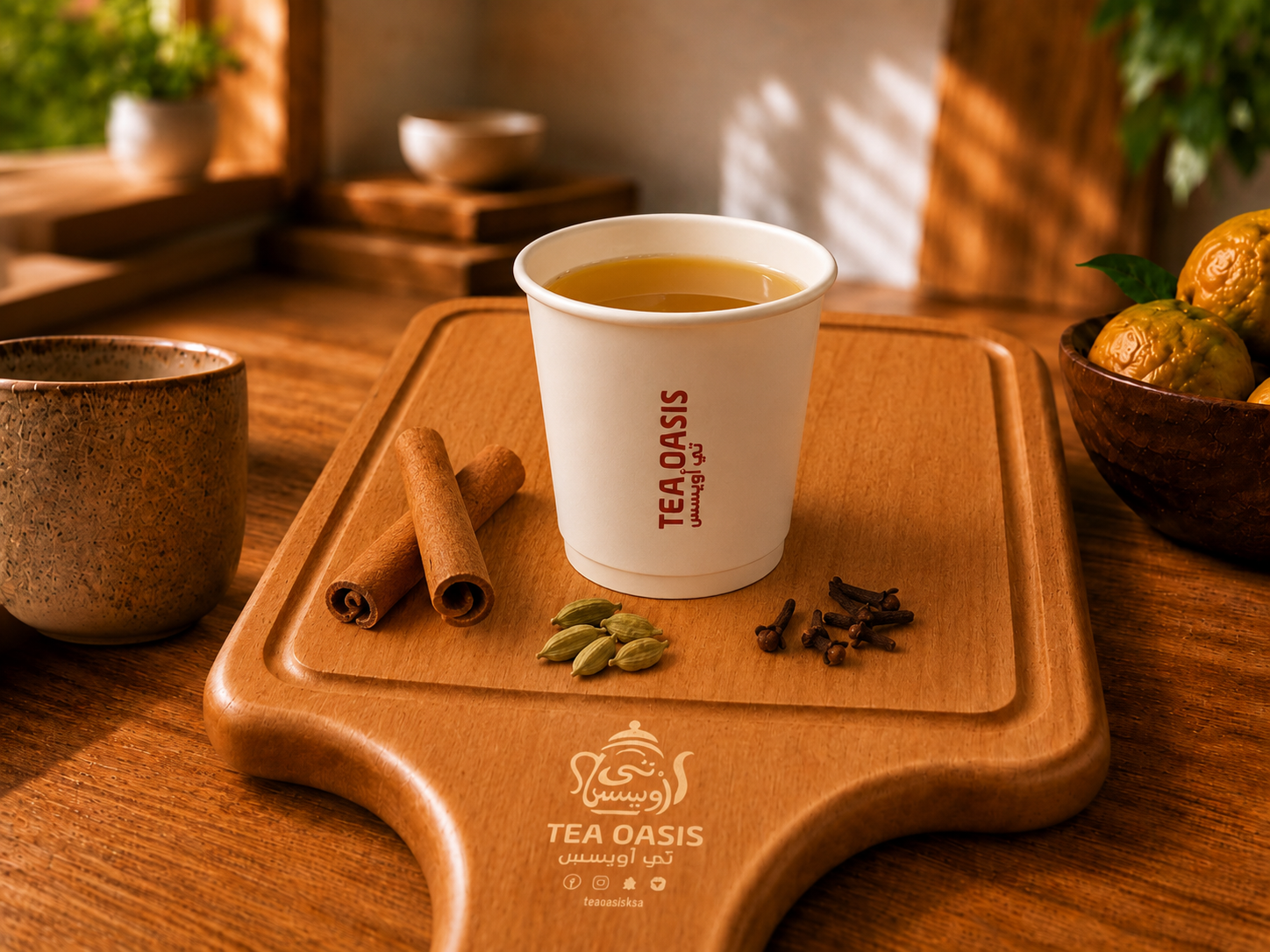
The defining ingredient isn’t the bean itself, but what’s added to it: cardamom. It’s the essential spice in every authentic Saudi qahwa, providing the citrusy, aromatic character that makes the drink instantly recognisable. Saffron is often added as well, lending a subtle golden hue and delicate floral note that elevates the cup further. Some regional variations include cloves, cinnamon, or rose water, particularly in the Hejaz region.
Traditionally, qahwa is served unsweetened. Rather than masking the coffee’s natural bitterness with sugar, it’s balanced with dates — the classic pairing that’s been served alongside Arabic coffee for as long as the drink has existed.
How It’s Brewed — and Why the Ritual Matters
Traditional preparation begins with roasting green Arabica beans in a mihmas, a long-handled iron pan, just until they turn that signature golden-brown. The roasted beans are then ground, traditionally with a wooden or stone mortar and pestle called a mihbaj — the rhythmic sound of grinding was historically a signal to neighbours that coffee was being prepared and guests were welcome to come.
The coffee is then simmered, not filtered, in a long-spouted pot called a dallah, with cardamom and saffron added during the brewing process. It’s served in small, handleless cups called finjan — always offered to guests first, a gesture of respect woven into Saudi hospitality customs that predates any modern café.
The Hospitality Ritual: More Than Just Pouring a Cup
Serving qahwa has never been a casual act. Traditionally, the host or eldest family member pours coffee for guests according to age and seniority, moving through the gathering with the dallah in hand. Guests are expected to accept at least one cup — often three is the polite number — gently shaking the finjan from side to side to signal they’ve had enough.
This ceremony reflects something central to Saudi culture: hospitality isn’t an afterthought, it’s a structured, respected practice. Every cup of qahwa carries that same intention, whether served in a family majlis or at a café table.
The Health Side of Qahwa
Saudi Qahwa carries genuine wellness benefits beyond its cultural significance. It’s nearly calorie-free when served unsweetened, and the aromatic compounds in cardamom and saffron have been associated with mood elevation and stress reduction. Many people drink it before physical activity or between meals as a natural way to support energy and appetite control, without the heavy caffeine crash associated with stronger brews.
Two to three small cups a day is generally considered a comfortable, traditional amount — enough to enjoy the ritual and the flavour without overdoing the caffeine.
The Perfect Pairing for Your Chapati
At Tea Oasis, qahwa isn’t an afterthought on the drinks menu — it’s part of the full chapati experience. The coffee’s light, aromatic profile works particularly well alongside our savoury chapati fillings, where its gentle cardamom warmth complements rather than competes with cheese, egg, or za’atar flavours. For sweeter chapati options, qahwa’s traditional unsweetened character provides a clean contrast to balance the richness.
Visit Tea Oasis in Al Khobar or order via WhatsApp — every cup is brewed fresh, the traditional way, ready to be poured the moment you arrive.
FAQ ON Saudi Coffee (Qahwa)