Description
What Separates a Great Karak from an Average One
Not all karak is created equal, even when the ingredients list is identical. The difference is entirely in technique — specifically in the simmering.
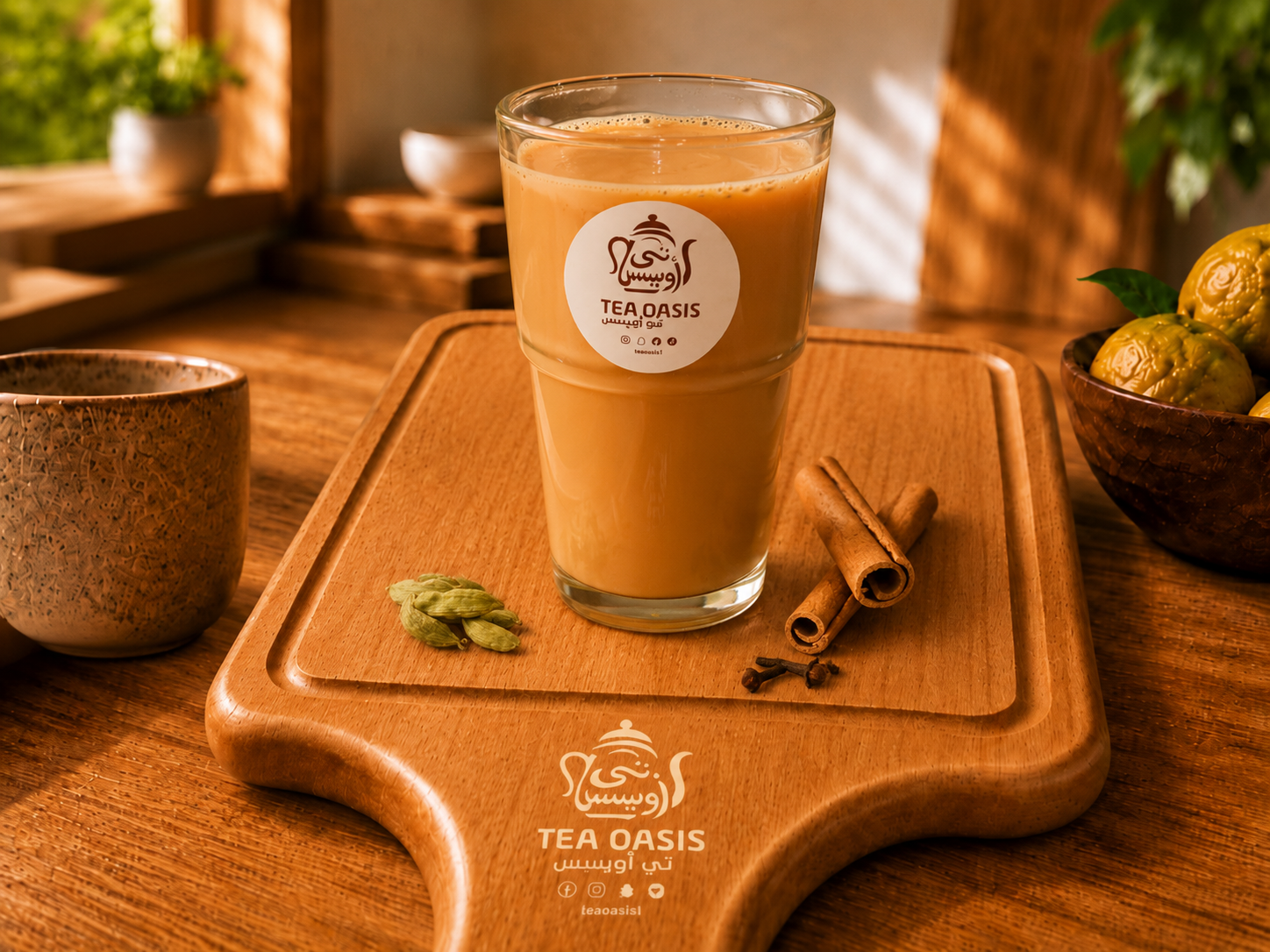
The single most important rule in proper karak preparation is patience: the tea and spices must be brought almost to the boil, then pulled back before they actually boil over, then brought up again. This process — done repeatedly — concentrates the flavour, deepens the colour to that characteristic caramel amber, and develops the body that makes the drink feel genuinely thick rather than just milky. A rushed karak — one that’s simply boiled, milk added, poured and done — will taste thinner, less spiced, and less satisfying than a properly simmered cup, even if it contains the same ingredients.
At Tea Oasis, every karak is brewed with this in mind. The colour you see in the cup is not food colouring — it’s the result of the slow development that the drink requires.
The Spice at the Heart of It — Green Cardamom
Karak can be prepared with many spices, but green cardamom is the one that makes it karak rather than just spiced tea. Green cardamom — chosen specifically over black cardamom, which has a more medicinal and smoky character — delivers the citrusy, aromatic warmth that is the drink’s defining sensory signature. It’s the spice that you recognise instantly and associate with Gulf tea culture.
Beyond flavour, cardamom carries real nutritional dimension. It’s a documented source of antioxidants and has been associated with improved digestion, antibacterial effects, and mild anti-inflammatory properties. Combined with the well-established antioxidant polyphenols in black tea itself, the spice blend in karak makes it genuinely more than just a sweetened milk drink.
The Three Karak Variants — Which One Is Yours
Al Khobar’s karak culture has developed beyond the single classic cup. Three main variants are now widely recognised across the city’s best karak destinations:
- Classic (cardamom karak): the baseline — green cardamom and black tea with evaporated milk. This is the version that defines Gulf karak culture, the one most people picture when they hear the word. Rich, warmly aromatic, gently sweet
- Saffron karak: saffron threads added during the simmer deepen the flavour with an earthy, golden quality that adds complexity and a slightly more luxurious character. The colour becomes even richer. This is considered the most ‘Gulf-authentic’ of the three by many karak drinkers who grew up with saffron as an essential spice
- Ginger karak: fresh ginger added to the simmer introduces a spicy, warming edge that cuts through the creaminess with more presence. Popular particularly in the mornings and when you want the tea to feel more energising — the ginger’s heat adds a different dimension from cardamom’s aromatic quality
All three are available at Tea Oasis. If you’ve never tried karak with saffron, it’s worth ordering alongside a classic cup to compare.
Karak vs. Other Drinks — When to Choose It
If you’re deciding between karak, Saudi qahwa, Turkish coffee, or plain tea, here’s the honest guide:
- Choose karak when: you want warmth, creaminess, and the specific comfort of a spiced milk tea — morning or evening, solo or shared
- Choose Saudi qahwa when: you want something lighter, unsweetened, more ceremonial — the coffee that supports hospitality rather than the one that wakes you up
- Choose Turkish coffee when: you want intensity and depth, something to focus the mind rather than warm the spirit — the most caffeine-forward of the three
- Choose plain tea when: you want neither spice nor milk and prefer the clean, direct flavour of brewed leaves with nothing added
Karak occupies the ‘comfort and warmth’ position that none of the others fill in quite the same way. It’s the drink most people come back to not because it’s the strongest or the most traditional, but because it delivers the most consistent satisfaction across the widest range of moods and moments.
Order at Tea Oasis, Al Khobar
Visit Tea Oasis in Al Khobar or order via WhatsApp. Tell us which variant — classic, saffron, or ginger — and your sweetness preference. Every cup is brewed fresh. Every cup is worth the wait.
FAQ ON Karak