Description
Saudi Arabia’s Only Fully Plant-Based Chapati — And the Most Underrated
Scan every chapati filling on every KSA menu and you’ll find eggs, cheese, naqaniq, pepperoni, chicken, liver. All of them contain animal products. Every single one.
Except falafel.
Chapati falafel is the only standard chapati filling across Saudi Arabia that is completely plant-based. No meat, no egg, no dairy in the falafel itself — just ground chickpeas, fresh herbs, and spices, formed into crispy golden balls and served warm inside fresh chapati. It’s a combination that has existed in Arab food culture for centuries, and it’s one of the most nutritionally impressive items on our entire menu.
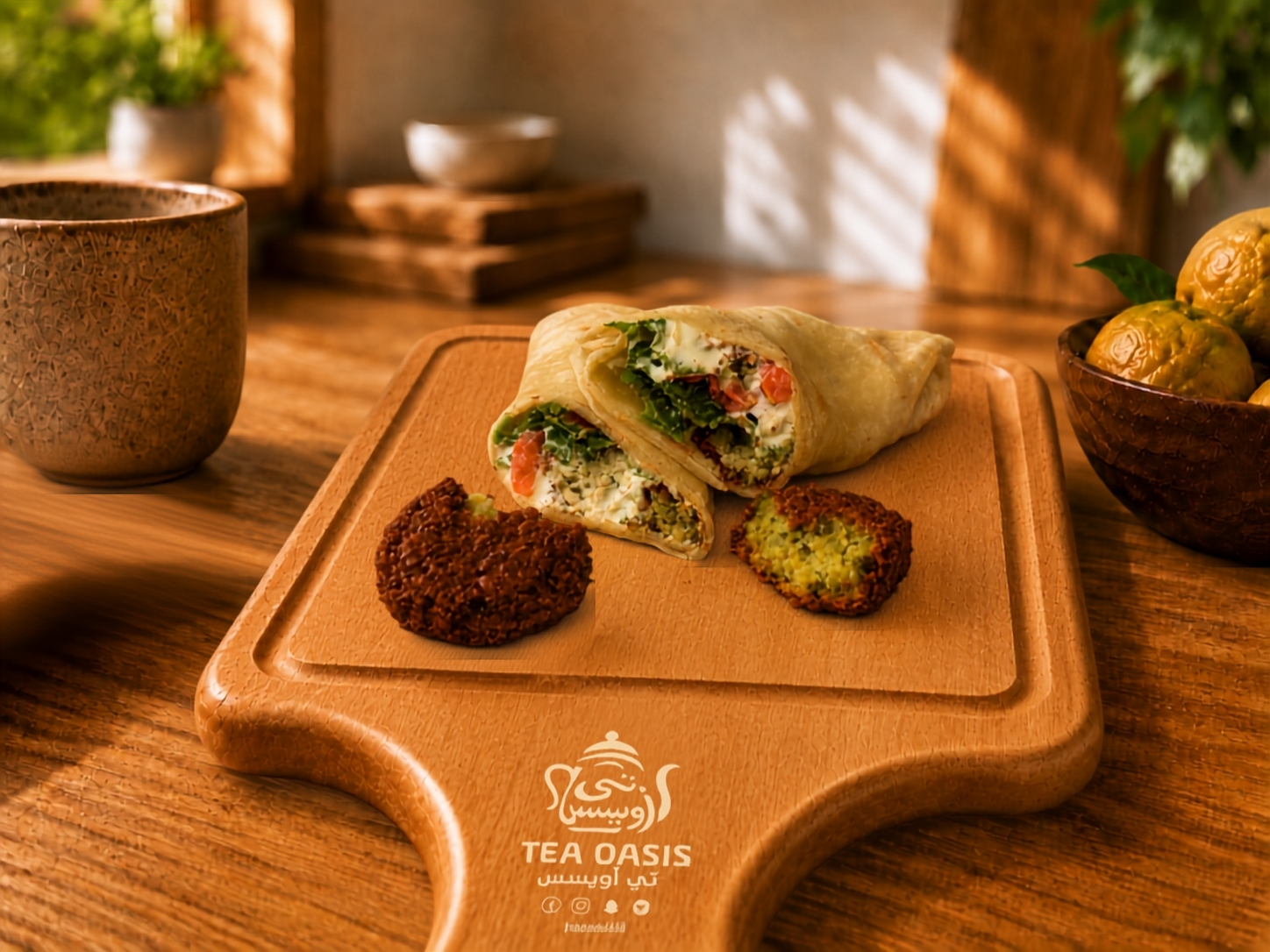
At Tea Oasis, we serve it the way it deserves to be served: warm falafel, fresh chapati, cream cheese, arugula, and tomatoes. A complete meal in a single wrap, under 330 calories, with genuine plant-based protein that carries you through the morning.
What Makes Falafel Different from Every Other Chapati Filling
Most chapati fillings are simple: one or two components with a clear flavour profile. Egg has protein and richness. Cheese has fat and salt. Peanut butter has nutty depth.
Falafel is a dish in itself before it even gets inside the chapati. It’s made from ground chickpeas (and sometimes fava beans) blended with parsley, cilantro, garlic, cumin, coriander, and other spices, then formed into small balls and fried until the outside is crisp and golden while the inside stays soft, herbal, and aromatic.
What you’re wrapping inside the chapati isn’t a single ingredient — it’s a textured, spiced, layered food with a flavour profile that moves through nutty, herbal, savoury, and slightly tangy in a single bite. The chapati’s mild warmth gives falafel’s complex flavour somewhere to land without competing with it.
The result is a chapati filling that tastes genuinely different from every other option on the menu. Bold, herbal, complex — and unmistakably Middle Eastern.
Falafel’s Nutrition: The Complete Plant Protein Story
Falafel’s nutritional reputation sometimes suffers from its association with deep-frying. But the base ingredient — chickpeas — is one of the most nutritionally dense plant foods on earth, and that doesn’t change in the frying process.
- Complete plant protein: falafel has an Amino Acid Score of 111, meaning it provides all nine essential amino acids — an achievement rare among plant protein sources and one it shares with meat, eggs, and dairy
- 13–21 grams of protein per 100 grams, depending on preparation — a six-piece serving delivers approximately 13 grams of plant-based protein alongside 6 grams of dietary fibre
- Rich in folate — essential for cell repair, DNA synthesis, and particularly important during pregnancy
- Iron and magnesium from chickpeas — supporting energy production, oxygen transport, and muscle function
- Anti-inflammatory compounds from the herb blend: parsley and cilantro contain antioxidant flavonoids; cumin has documented anti-inflammatory properties
For vegetarians and vegans in Saudi Arabia seeking a protein-rich breakfast without animal products, chapati falafel delivers what no other chapati on the menu can. For everyone else, it’s simply one of the most flavour-complete and nutritionally rounded breakfasts available.
The Toppings That Complete the Build
Plain falafel inside chapati works. But the full build — falafel with cream cheese, arugula, and tomatoes — is a different experience entirely, and it’s the version most Saudi chapati shops serve for good reason.
- Cream cheese: the fat in the cream cheese balances falafel’s crispy, slightly dry exterior. The creaminess fills the space between falafel pieces and the chapati wall, so every bite has moisture and richness. Without cream cheese, falafel chapati can feel dense. With it, the filling becomes complete
- Arugula: the pepperiness of fresh arugula cuts through both the falafel’s earthiness and the cream cheese’s richness. It’s the component that keeps the whole build feeling fresh rather than heavy. A textural contrast that works in the same way sesame seeds work on a bun — present but essential
- Tomatoes: brightness and acidity. Fresh tomato slices bring the same sharpness that tahini sauce or lemon would bring in a traditional falafel sandwich — they lighten the whole filling and give your palate a reset between bites
At Tea Oasis, we include cream cheese, arugula, and tomatoes as the standard build. Every component earns its place.
Calories, Portion, and the Lightest Chapati on the Menu
Chapati falafel sits between 225 and 330 calories per serving across KSA menus — making it one of the lowest-calorie chapati fillings available. For context, that’s significantly lighter than:
- Chapati cheddar naqaniq: 380–450 calories
- Chapati pepperoni omelette: 420–490 calories
- Chapati egg with cheese: 320–380 calories
At 295–330 calories for the full build (falafel + cream cheese + arugula + tomatoes), chapati falafel is the breakfast choice for anyone who wants something genuinely satisfying without spending half their daily calorie allowance on a single item. The 6 grams of dietary fibre in the falafel also means it keeps you full longer than its calorie count would suggest.
It is, without qualification, the most calorie-efficient filling on the Tea Oasis chapati menu.
When to Order and What to Pair
Chapati falafel is a morning item by default, but it crosses easily into the lunch window. The fibre and plant protein from the chickpeas create a sustained satiety that doesn’t peak and crash the way fast carbohydrates do. You eat this at 8 AM and you’re still focused at noon.
It’s also — genuinely — an any-audience item. Vegetarians and vegans can eat it without modification. Meat-eaters find it satisfying on its own terms, not as a compromise. Children respond well to the flavour without it being spicy or unusual. Families ordering a mixed spread should include this.
For Ramadan specifically: falafel is one of the most traditional iftar proteins across the Arab world — particularly in Levantine and Egyptian food culture. At Tea Oasis, chapati falafel as a suhoor or iftar option is a natural fit — fast, filling, plant-based, and deeply culturally rooted.
For drinks: karak tea is the natural pairing in Saudi breakfast culture — the spiced sweetness of karak against falafel’s herbal earthiness is a genuinely complementary contrast. Earl Grey works well for those who want a lighter, more citrus-forward option. Both are available at Tea Oasis alongside every chapati order.
Order via WhatsApp or visit our Al Khobar location. Every falafel chapati is assembled fresh — warm falafel, good cream cheese coverage, arugula that’s still green and peppery, tomatoes that haven’t gone soft. Made to order, not made in advance.
FAQ ON Chapati Falafel