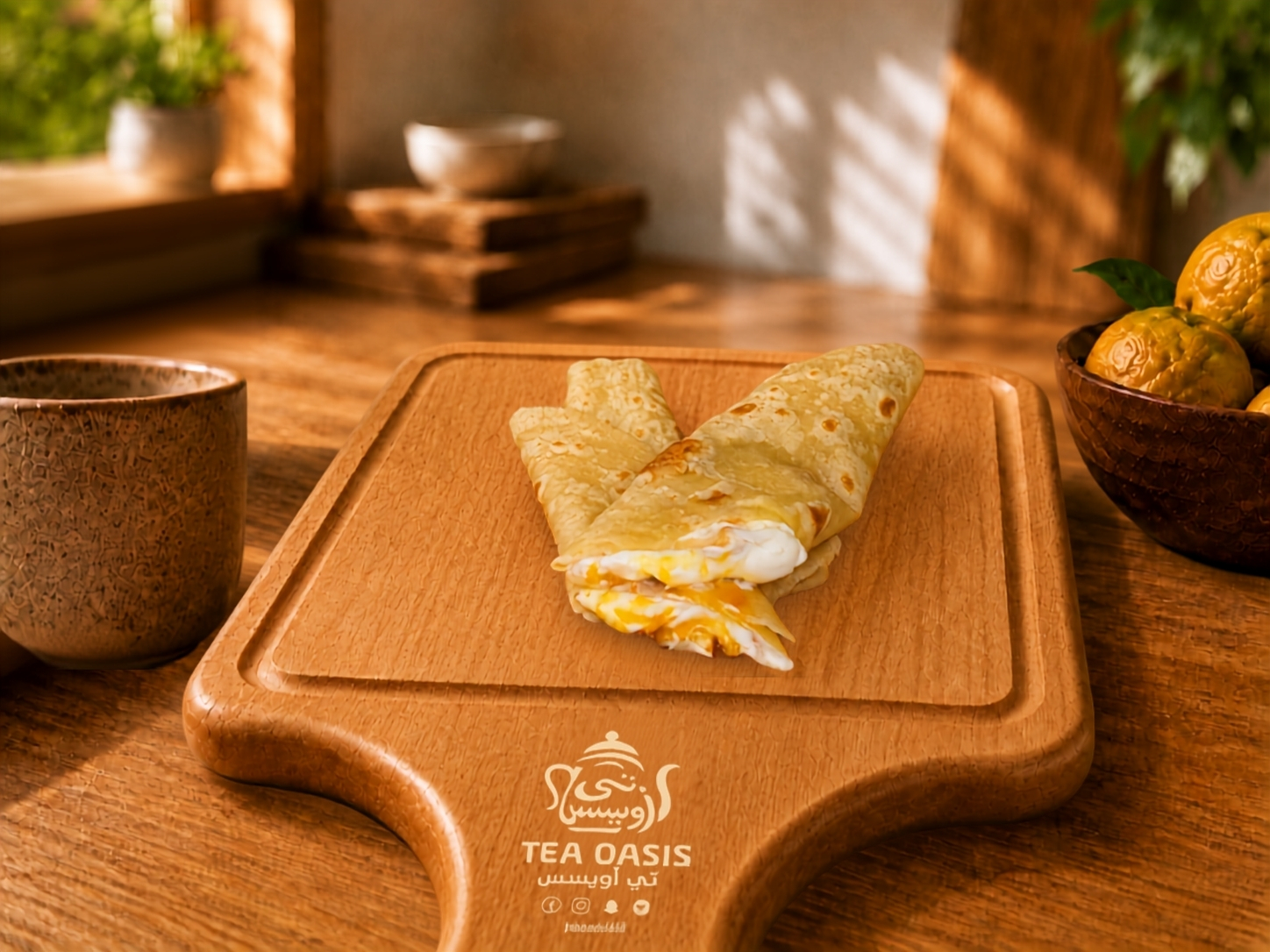
Description
Al Khobar’s Most Competitive Sweet Chapati — Done Right
If you’ve ordered chapati anywhere in Al Khobar, you’ve almost certainly seen labneh with honey on the menu. It’s one of the most universally available sweet chapati items in the city — practically every chapati shop within a few kilometres of Tea Oasis sells some version of it.
That tells you two things: it’s genuinely well-loved, and the competition for getting it right is real. With that much local competition, the difference between an average labneh with honey chapati and a great one comes down to two things — the quality of the labneh, and how generously the honey is applied.
At Tea Oasis, we don’t cut corners on either. This is what makes properly made labneh with honey worth seeking out, and why it remains one of the most ordered items on our menu.
What Makes Labneh Different from Yogurt
Labneh starts as yogurt, but it doesn’t stay there. Through a straining process — traditionally hanging salted yogurt in cloth for 12 to 24 hours — the whey drains away, leaving behind a thick, concentrated dairy product with roughly 2.5 times the protein density of the yogurt it started as.
This isn’t a minor technicality. The straining process is what gives labneh its distinctive tangy depth and its substantial, spreadable texture — completely different from the thin, pourable consistency of regular yogurt. It’s also what makes labneh lower in lactose than most dairy products, since much of the lactose drains out with the whey.
Quality matters here. Labneh made with care — properly strained, from good-quality milk — has a noticeably richer, tangier flavour than rushed or thin versions. This is why you’ll see some Al Khobar chapati shops specifically calling out the origin or brand of their labneh on their menus; customers can taste the difference, even if they can’t always articulate why.
Labneh with Honey vs. Labneh with Za’atar: Two Different Directions
Labneh appears on nearly every chapati menu in two main forms — paired with honey, or paired with za’atar — and they create genuinely different eating experiences from the same base ingredient.
- Labneh with honey: the sweet direction. Honey’s floral sweetness softens labneh’s natural tang, creating a dessert-adjacent breakfast that’s rich, comforting, and immediately appealing. The combination has been a staple across Arab breakfast tables for generations
- Labneh with za’atar: the savoury direction. The herb blend’s earthiness and sumac’s acidity sharpen labneh’s tang rather than softening it, creating a more complex, herbal flavour profile that leans savoury rather than sweet
Neither is more ‘authentic’ than the other — both are deeply traditional. If you’re new to labneh chapati, honey is the gentler introduction. If you already know you enjoy labneh’s tang and want to lean into it, za’atar is the direction to explore.
Two Health Stories in One Filling
Chapati labneh with honey carries genuine nutritional substance from both of its core ingredients — a combination most people don’t realise when they order it.
Labneh’s fermentation process means it naturally contains live probiotic bacteria, which research links to improved gut health, reduced inflammation, and enhanced digestion. Combined with its concentrated protein content — roughly 10–12 grams per 100g — labneh is one of the more substantial dairy options available on any chapati menu.
Honey, particularly Saudi-sourced varieties like Sidr and Talh honey, carries its own documented research. Published studies have found Saudi honey varieties exhibit measurable antioxidant and anti-inflammatory effects, alongside metabolic benefits when consumed as part of a balanced diet.
Together, labneh’s probiotics and honey’s antioxidant properties make this one of the more nutritionally interesting sweet chapati options — genuinely more than ‘just a treat,’ even though it tastes like one.
Calories and Why the Numbers Are So Consistent
Across nearly every Al Khobar chapati menu, labneh with honey lands remarkably consistently in the 285–320 calorie range — a tighter spread than almost any other chapati filling in this category. That consistency suggests a fairly standardized recipe across the market: a set portion of labneh, a set drizzle of honey, minimal variation.
At Tea Oasis, our standard build sits at the generous end of that range — around 300–320 calories — reflecting a properly substantial portion of labneh rather than a thin scrape. It’s filling enough to function as a complete breakfast, light enough not to feel heavy.
Order from Tea Oasis, Al Khobar
Karak tea is the natural local pairing — its spiced warmth plays beautifully against labneh’s tang and honey’s sweetness. For something lighter, Earl Grey works well too. Visit us in Al Khobar or order via WhatsApp; every chapati is made fresh, with real strained labneh and honey applied generously, not as an afterthought.
FAQ ON Chapati Labneh with Honey