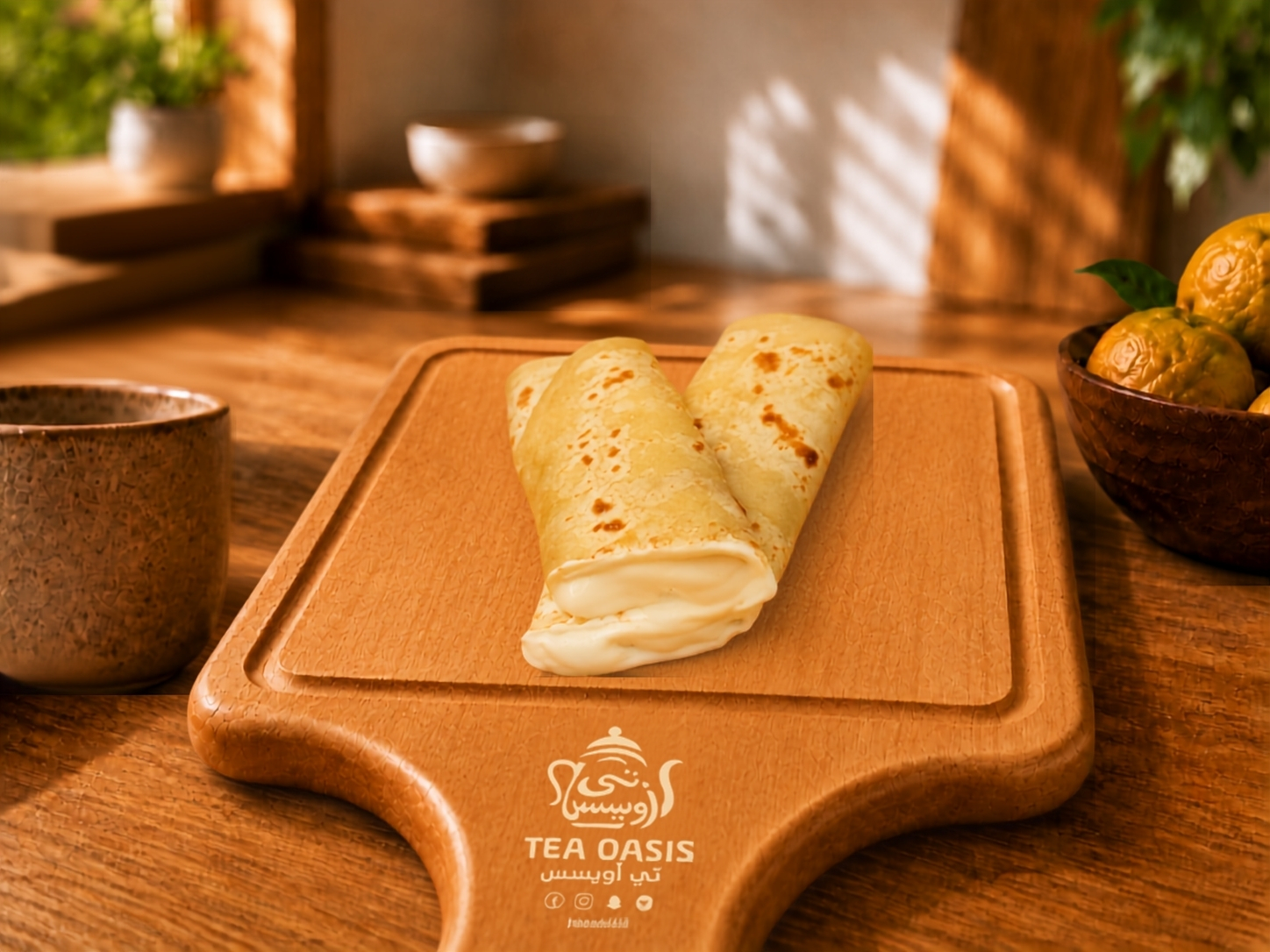
Description
Saudi Arabia’s Most Versatile Chapati Filling — Finally Explained
Walk through any chapati shop menu in Saudi Arabia — from Riyadh to Jeddah to Al Khobar — and you’ll find liquid cheese listed in more combinations than any other ingredient. It appears standalone. It pairs with eggs. It pairs with Oman chips. It pairs with honey, halva, and jam. It acts as the base for shakshuka. It binds the toppings in complex chapati builds.
No other chapati filling does this. Liquid cheese is the only ingredient that works equally well as the main event and as the supporting player.
And yet, despite being the most-used cheese across Saudi chapati menus — and despite customers ordering it daily from Dammam to Jeddah — nobody has ever written a proper article explaining what it is, why it works, and how to get the most out of it.
At Tea Oasis, we serve chapati liquid cheese the way it’s meant to be served: warm chapati, generous liquid cheese coverage, made fresh to order. This is what it is, why it’s different from every other cheese, and how to order it right.
What Liquid Cheese Actually Is — the Question Every Customer Has
The name sounds technical. The product is simple. Liquid cheese — sometimes called ‘cream cheese cups’ or ‘melted cheese sauce’ on KSA menus — is a processed, spreadable cheese product with a flowing, pourable consistency at room temperature or when warmed. Think of it as the cheese that doesn’t need to be melted because it’s already there.
In the Saudi chapati context, liquid cheese typically comes from processed cheese manufacturers — similar to the style of Kraft Easy Cheese or Arabic cheese spread products. It’s made from a blend of natural cheese, milk, emulsifying salts, and flavourings that create a smooth, consistent product that behaves differently from solid cheese types.
What sets it apart from cheddar, kiri, or halloumi:
- Cheddar: solid at room temperature, requires heat to melt, sets firm when it cools — gives you distinct pockets of flavour rather than even coverage
- Kiri: soft but still solid, tangy and thick — stays in place rather than flowing, good for defined layers
- Halloumi: firm, grilled or heated to order, chewy texture — a distinct eating experience, not a coating cheese
- Liquid cheese: flows freely at serving temperature, coats every surface it touches, creates uniform flavour distribution — the consistency is the entire point
That consistent coating is why liquid cheese became the dominant cheese in Saudi chapati culture. When you bite into a chapati with liquid cheese, every bite has the same creamy, savoury experience. No uneven pockets. No dry corners. Just consistent coverage from first bite to last.
Standalone: The Purest Version
Chapati liquid cheese on its own — no additions, no toppings — is one of the most honest things on a chapati menu. The focus is entirely on two things: the freshness of the chapati and the quality of the cheese.
When both are right, the experience is immediate and satisfying. The warm chapati softens the liquid cheese slightly, making it even more fluid. The cheese’s mild, creamy, slightly salty flavour is clean and uncomplicated. There’s no other ingredient competing for attention.
At 250–287 calories for the standalone build, it’s also one of the lighter savoury chapati options — appropriate as a snack, a quick breakfast, or the lighter choice in a mixed order alongside something more substantial.
It’s the chapati you order when you know exactly what you want and don’t want anything getting in the way of it.
The Sweet Pairings: Honey, Halva, and Jam
Liquid cheese’s mildness makes it one of the few savoury chapati fillings that works equally well in a sweet context. The combination of liquid cheese with honey is one of the most popular sweet chapati orders across Saudi Arabia — and for good reason.
- Liquid cheese + honey: the salt in the cheese amplifies the sweetness of the honey, while the honey’s viscosity blends with the liquid cheese to create a combined filling that’s simultaneously sweet, rich, and savoury. Saudi food culture has a long tradition of pairing mild dairy with honey — this is that tradition inside chapati. At 250 calories, it’s also one of the lighter sweet options
- Liquid cheese + halva (حلاوة طحينية): tahini halva’s nutty bitterness contrasts beautifully with the creamy neutrality of liquid cheese. The two textures — liquid cheese flowing, halva dense and granular — create a more complex eating experience than either alone
- Liquid cheese + jam: strawberry or mixed berry jam brings fruit acidity that cuts through the creaminess of the cheese, lightening the filling in the same way za’atar does for labneh. A quick, satisfying sweet option
All three sweet combinations are available at Tea Oasis. If you haven’t tried liquid cheese with honey, it’s the first addition to try.
As a Base: Why Liquid Cheese Makes Other Fillings Better
The most underappreciated role of liquid cheese in Saudi chapati culture is its function as a base — the ingredient that makes other fillings bind to the chapati and distribute evenly.
Egg chapati with liquid cheese is one of the most commonly ordered variants across all KSA menus. The liquid cheese doesn’t just add dairy flavour — it creates a continuous layer that the egg sits inside, ensuring every bite has both elements in proportion. Without the liquid cheese, fried egg can sit as a single mass in the centre of the chapati. With it, the cheese flows around the egg and distributes the flavour across the whole surface.
The same principle applies to chips (Oman chips + liquid cheese — the ‘fasha’ combination beloved across Saudi chapati culture) and to shakshuka chapati, where liquid cheese moderates the acidity of the tomato-egg sauce and adds a creamy counterpoint that makes the filling less aggressive and more balanced.
Liquid cheese is the team player of the chapati menu. It makes everything it’s paired with taste better than it would alone.
Calories, Pairing, and Ordering at Tea Oasis
Understanding the calorie range for liquid cheese chapati requires understanding what you’re ordering:
- Plain liquid cheese chapati: 250–287 calories — the standalone savoury option
- Liquid cheese + honey: approximately 270–300 calories — honey adds 20–40 calories depending on quantity
- Liquid cheese + Oman chips (fasha): approximately 370–408 calories — chips add 100–120 calories
- Liquid cheese + egg: approximately 320–360 calories — egg adds 70–90 calories
For drinks: karak tea is the natural pairing in Saudi chapati culture, and liquid cheese chapati is one of the strongest karak pairings on the menu. The sweetness of karak against a savoury liquid cheese chapati is the Saudi breakfast combination that has no equal. With the honey variant, even karak can feel slightly redundant — the chapati is already providing sweetness — so Earl Grey or a lighter tea works better alongside the sweet build.
Visit Tea Oasis in Al Khobar or order via WhatsApp. Tell us your preference: plain, with honey, or with Oman chips. Every chapati is freshly made and the liquid cheese is applied generously — coverage to the edges, not just pooled in the middle.
FAQ ON Chapati Liquid Cheese