Description
What Is Sambusa? Saudi Arabia’s Most Beloved Crispy Snack
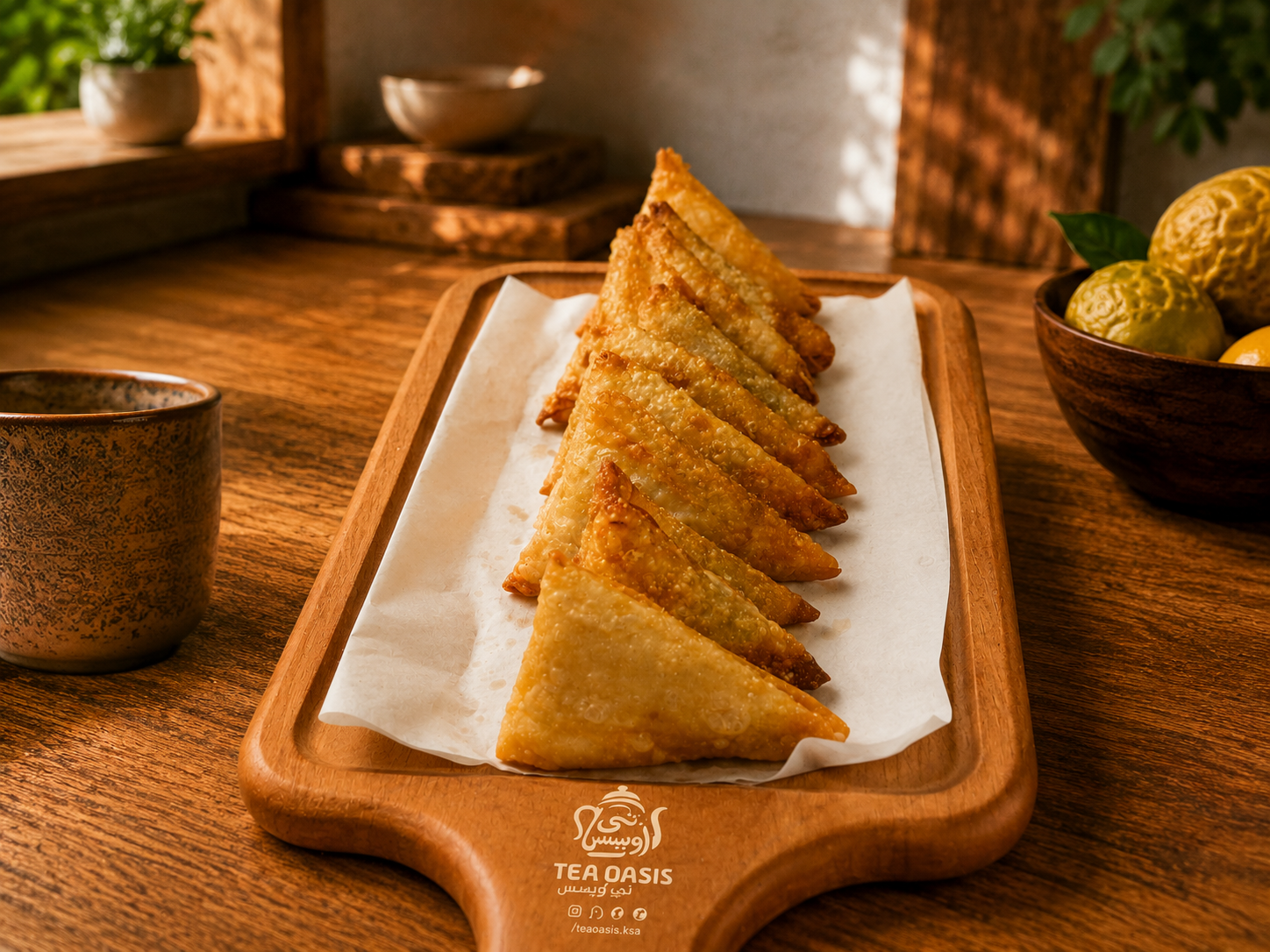
Sambusa is a triangular, deep-fried pastry stuffed with a spiced filling — most commonly seasoned ground beef or chicken, though cheese and vegetable versions are equally popular across Saudi Arabia.
If you’ve had an Indian samosa or a Lebanese sambousek, you’re already in the family. The Gulf version — sambusa — uses thinner, crispier dough and tends toward aromatic spice blends like cumin, coriander, and black pepper. No potato mash here. The Saudi sambusa is meat-first, crunch-first.
The name itself is ancient. Historians trace sambusa back to Persian sanbosag, a fried pastry mentioned in 10th-century medieval texts. It traveled the trade routes across Central Asia, the Indian subcontinent, and the Arabian Peninsula, picking up local flavors along the way. By the time it arrived in Al Khobar, it had earned its place as the snack of the Eastern Province.
Sambusa and Al Khobar: A Local Love Story
Al Khobar has always been a city where food cultures mix. Its port history, expat population, and proximity to Bahrain created a culinary scene that’s genuinely diverse — and sambusa fits right into that story.
Walk into any traditional kitchen in the Eastern Province and you’ll find sambusa being folded the night before Eid, stacked in towers before iftar, or plated casually for an afternoon guest. It’s the food that says: “You are welcome here. Let me feed you something.”
Outside the home, café culture has made sambusa even more accessible. Light bite menus across the city feature it as a natural companion to Arabic coffee, mint tea, or a cold lemonade. At Tea Oasis Al Khobar, it’s not a footnote on the menu — it’s a reason to come in.
The Tea Oasis Sambusa: Crispy, Spiced, and Served Right
Tea Oasis takes sambusa seriously. The filling is seasoned with traditional Gulf spices — cumin, coriander, and a hint of heat — balanced to work as a light bite, not a heavy meal. The pastry is fried to a proper golden crisp, not soft, not oily, not pale.
It arrives hot. That matters. Sambusa is a food that has exactly one perfect temperature window, and at Tea Oasis, you get it at that moment.
Pair it with a glass of karak chai and you’ll understand why this combination exists. The spiced, milky warmth of the tea and the crunch of the sambusa don’t compete — they complete each other.
What to Pair With Sambusa at Tea Oasis
The best companions for your sambusa order:
▶ Karak Chai — The classic. Spiced black tea with condensed milk, Al Khobar’s everyday comfort drink.
▶ Qahwa (Arabic Coffee) — Light, cardamom-forward, and cleansing between bites.
▶ Fresh Mint Lemonade — A cold contrast that sharpens the sambusa’s richness.
▶ Iced Karak — If you want the karak experience without the heat, this works just as well.
▶ Shai Ahmar (Red Tea) — Clean, unflavored black tea that lets the spices in the sambusa carry the flavor.
Whatever you’re drinking, sambusa does not ask for much from its companion. It just asks that you don’t eat it cold.
The Many Faces of Sambusa: Fillings Worth Knowing
Sambusa is not one thing. Across Saudi Arabia and the Gulf, fillings shift depending on the region, the cook, and the occasion. The common thread is the spice — there’s always something aromatic inside.
The filling variations you’ll encounter most often:
▶ Ground beef with cumin and coriander — The Saudi classic. Dense, savory, and satisfying.
▶ Spiced chicken — Lighter than beef, popular with families and younger diners.
▶ Cheese and herbs — A vegetarian option with a softer flavor that goes well with tea.
▶ Lentil and caramelized onion — Earthy, slightly sweet, and underrated.
▶ Mixed vegetables with chili — For when you want crunch on top of crunch.
At Tea Oasis, the sambusa stays true to its Saudi roots: a well-spiced, properly constructed bite that doesn’t try to reinvent itself.
Sambusa Beyond Ramadan: An Everyday Bite in the Eastern Province
Sambusa’s peak fame comes during Ramadan, where it appears on every iftar table across the Kingdom. If you’ve been to Al Khobar during the holy month, you’ve seen the sambusa towers at every buffet, every household spread, every gathering.
But limiting sambusa to Ramadan is like limiting tea to winter. In Al Khobar, sambusa is a year-round affair. It shows up at school picnics and corporate gatherings alike. It’s served at weddings and work breakrooms. It pairs with your morning coffee before a meeting or your afternoon mint tea when the day slows down.
The reason it persists beyond the holiday is simple: it’s fast, it’s portable, it fills you up without weighing you down, and it tastes genuinely good. That’s a rare combination in the light bites category.
Why Sambusa Is the Ultimate Light Bite
Light bites exist on a spectrum. On one end you have the forgettable — stale chips, plain crackers, that bread basket everyone ignores. On the other end, you have things that are too rich or too filling to qualify as ‘light.’
Sambusa sits in the rare middle. Two or three pieces and you’re satisfied, not stuffed. The crispy shell gives you the snack texture you wanted. The spiced filling gives you actual flavor. And the whole thing arrives in two minutes.
For Al Khobar cafés like Tea Oasis, sambusa works across every occasion: a solo afternoon visit, a group of friends ordering a round with their drinks, or a light pre-dinner bite at the family table. It doesn’t need context. It just needs to be hot.
Visit Tea Oasis Al Khobar — Light Bites Done Right
Sambusa at Tea Oasis isn’t complicated. It’s a good pastry, a good filling, and a good reason to stop in. Whether you’re between meetings, catching up with a friend, or just craving something crispy on a Tuesday afternoon, the Light Bites menu is built for exactly that moment.
Find Tea Oasis Al Khobar on teaoasisksa.com. Browse the full Light Bites series and pair your sambusa with anything from the drinks menu — you won’t go wrong.
Frequently Asked Questions About Sambusa